Tag: life

  • Madame Guillotine Would’ve Been Proud

    Madame Guillotine Would’ve Been Proud

    Polo is the most difficult sport ever. No competition. I’m not just talking about equestrian sports. I mean ALL SPORTS. Now, before you come at me, I will preface the reasoning for my claim with the fact that I have not tried every sport on earth. But the sports I have tried (show jumping, skiing, rugby, football, tennis, cricket, boxing, ping pong, snooker, swimming, platform diving, scuba diving) are WAY EASIER.

    Today was stick and balling. A day I look forward to, although it usually ends with my ego sat in a pile of mulch on the floor, next to the arena ball I’ve missed for the seventeen-hundredth time. Still, while it was a challenge, it was useful, and I can feel myself improving.

    In saying that, I chopped the top off so many times today, Madame Guillotine would’ve been proud.

    For those that don’t know, chopping the top off means hitting the ball too high up, so it goes absolutely nowhere on account of being smashed into the floor. It’s also accompanied by a distinctively disgusting clink, rather than the audibly appealing clunk of a well-struck ball. Though it does depend on the ball.

    We kept things at a slow walk, focusing on getting the timing and strokes right, just like we did when I learned on foot. Even so, I floundered. I was wrestling with myself to remember “leg on, squeeze, rein on the neck” while trying to hit the ball at the same time. My coach kept on at my form, but keeping the commands right through the shot was hard enough, let alone looking good doing it.

    What I found was that as soon as I assumed the position for any of the four strokes, I would lose my balance and either leg yield, turn, or stop completely. All of which, in some form or another, would lead to a foul.

    I miss the ease of my early lessons, back before I’d made the weight to ride, when my biggest problem was trying not to get caught in the thorns after chasing a polo ball I’d sent 150 yards into the bush for the third time. Before I could ride the polo pony available to me, I needed to cut around 6kg (around 13lbs, or just under a stone), which I did with a solid calorie deficit, active work and tracking. I’m healthier for it now.

    Riding and stick and balling are, independently, quite simple once you get the hang of them. Not easy, but not impossible either. The processes are easy-ish to remember, the focus is there, and once you notice what you’re doing wrong, you can more or less work out how to improve. That doesn’t feel like the case when you put the two together. Unfortunately for yours truly, as soon as we try to bring it all together for the final scene, the lead act collapses, the sun falls out the sky, and somehow the conductor’s stuck in the tuba.

    While I love polo, today was another tough day. Being recognised for improving did help, and remembering that everyone finds this stuff hard took some of the pressure off, but it was still slightly disheartening. The big realisation today was just how long it’s going to take me to get to the level I want.

    PS. Did you know walk and canter have a similar feel? Nope, neither did I. But it makes total sense why canter is so much more comfortable than trot. Trot’s horrid. Nobody likes trot.

  • Balancing Progress: An Internal Must

    Balancing Progress: An Internal Must

    My first lesson back after taking a week off was humbling to say the least. I found getting going super difficult, and not having been doing my stretches was more noticeable than I would have expected. I’m glad to be most of the way back to full health.

    The lesson itself was focused on balance in the shots. We do these without mallets to protect my elbows, which is both useful and frustrating. While in the open, practicing my swings going up and down the same line — nearside, offside, over and over again — I also found my fitness has dropped. The knees weren’t holding and I couldn’t keep the pressure on.

    I was getting super frustrated with myself and the horse today, which I know is terrible of me. Rome wasn’t built in a day, and to expect that I would pick up this skill in a short period of time was foolish. I envisioned it clicking much easier than it is. Sometimes, as I’ve written about, I have great lessons where everything goes well, but today was not one of those days.

    Today was a tough one. I even thought to myself, “Why am I doing this?” A sad thought, because in previous hobbies, learnings, and similar what-nots, it was around this time that I would lose my motivation. But that’s not happening here. Yes, it’s expensive, tiring, humbling, painful, and terrible for my ego (or good, depending on how you look at things). I had to remind myself why I do this.

    I feel like I have to.

    When I think about polo I don’t see the prestige, the class, the status, or the elitism. I see the best game in the world. A perfect mixture of power, speed, balance, and strategy. That and there’s horses.

    Altogether I’m glad I got back in the saddle today, but it was a highlight day. A day to tell me just how much work there is to do if I’m going to achieve my aims of playing pro.

    By the way, I’ve been working on a game review piece. It’s not quite ready yet, but I’m excited to get it out when it’s done.

  • A Day to Remember

    A Day to Remember

    Things really feel like they’re starting to click now. Heels down, deep in the saddle, leg yielding, half seat, and knees are all feeling much more natural again; just like they did a decade ago–when I was last riding regularly. There was some interesting feedback from my coach though, which has given me pause.

    Positioning

    Firstly, and certainly most importantly, positioning. If you’ve read about my lessons in the past then you’ll know a consistent complaint of mine is that I’ve been struggling to find my positioning. A mixture of a lack of time in the saddle and relying on the memory of what worked in the past.

    Keep the Heels Down!

    During my ride today–and just after–I thought the biggest improver of my riding was heels down. Which made sense, as when I pushed my heels down things started to come together. But after some time to process the lesson, I’m not sure that’s exactly it. Riding stability and control of the horse is a lot of different things working in tandem. Especially in polo.

    Now I think it may not have been heels down that gave me the control, but rather that it was the first thing my mind went to, and it reminded me to really think about what I was doing; and to put in the effort.

    Grip with your Knees

    Feeling the knees lock into the polo saddle today was also a massive help. I think this is partly because I lowered my stirrups and allowed myself to sit deeper in the seat, which was the advice from the AI; more on that later though. My coach had been going on at me–as he does with many other early polo players–about the importance of gripping with your knees. The complete opposite of what you have to do in show jumping.

    Polo saddles do not have knee pads like regular saddles do, and that’s because the padding makes it harder to get out of the seat and twist when leaning out to hit the ball. Great. However, it does mean that if your seat isn’t perfect, or you’re out reaching for the ball, there is not very much stopping you from “coming out the side door”. A turn of phrase that’s growing on me.

    Leg Yields & Turning

    All of the above: heels down, relaxing, knees on, are also translating into the ominous leg yield. It’s been a tough one: going from leg yielding the entire manège–a decade ago; like something out of a dressage show–to falling off the side when trying to change the rein just last week. But, today… Today I was a beast!

    One of the exercises my coach has me do, which I have seen countless times on Instagram, has been cantering and leg yielding from one side of a path to another. Now, on Instagram there tend to be cones or barrels for the horse to move around, but we had some trees and that worked just as well.

    We hit this one stretch–of about 160 yards–where, at the canter, I must have leg yielded five or six times in total. It felt smooth, we moved as one, and I could really feel Enza listening to my commands. And, as an added bonus, after getting lost a few times in the forest and dodging fallen trees, I pulled some stunning on-the-spot turns. It really felt like there’d been a rocket of a backhand and I was about to gallop off and get it.

    Holding the Half Seat

    Confidence and balance, two key traits required from any and all polo players. Funnily enough, the exact same two skills that are required to hold a strong and useful half seat. We can talk about flexibility at a later date and time.

    Sitting in the half seat is the most comfortable way to ride. You need strong legs, but when your legs act as these massive shock absorbers and you can remain in control, holding strong in your stance, it makes everything else so much easier.

    Rising trot, sh-mising trot, it’s all about the half seat. Control increases, balance is better, and the knees lock in. Winner.

    Finally Relaxing

    The most important factor however, and some of you may hate me for saying this–as it’s not easy–is staying relaxed. There were multiple occasions on the hack today where I felt my body tense up, hips lock, shoulders stiffen, and not only was my riding getting worse, but so was the pain of riding. Predominantly my back.

    However, when I relaxed–which is much easier said than done–by taking a deep breath in and out, letting myself slump, feeling my seat deepen and then sitting back up, I felt the flow of the horse’s movements come together and the control came back. It literally was a breath of fresh air.

    No longer was I fighting half-a-tonne of mammal, but working as one. Them the power and I the guide.

    Galloping

    What really made today special though was that it was the first time I galloped in over a decade. I remember it like it was yesterday. We were away on holiday, somewhere in the UK, and my brother and I went out on a hack, my first proper hack.

    After having our photos taken with some tourists, the instructor took us to a gallop. I remember getting up out of the saddle, leaning so far forward I was almost between the horse’s ears and just going. The real hook to that memory though was the instructor telling me to slow down and stop, but only as I started to pull away from her. I’m not sour about it.

    What a feeling though. The wind rushing past your ears, intensifying as you gain speed, is one of the best sounds you can hear. That and a clear connection with the ball. Directly opposing the distinctive cluck of chopping the top off.

    From standstill to gallop, with easy canters in between, today was the best riding experience I’ve had in my entire life. Still need to do some work on stopping though, but we’ll get there.

    Starting Ride-Offs

    As an added bonus today we started doing some work on ride-offs. Only at walk, don’t you worry. Ride-offs are one of those things that flood my head when I listen to certain music and envision myself playing polo competitively. That and some hefty full shots.

    In my head this is way easier, but the timing is essential. It’s so easy to foul. You have to be saddle to saddle, and if you cut across too hard and slow the horse down, not only do you lose the ride-off, but you run the risk of fouling; and no one wants to do that.

    An introduction to something I’ve been looking forward to, and I’m excited to do more. It’s also a good thing there are no trees on a polo field, as trying to practice while manoeuvring around various woodland architecture was more of a hassle than I care to admit.

    Coach’s Feedback

    What was quite interesting today was the feedback I got from my coach. Other than that I still have a lot of work to do–he’s a tough teacher, hard on students, but a great one–some firm instruction and ambitious goals are what I need.

    The main thing was not to read too much online about how to ride. I told him about the AI prompting and while he thought it could be helpful to a certain degree, he advised not to take it as gospel, which is basically the caveat of using AI anyway.

    The reason though was not because he thought AI would hallucinate, which it very much can, but because riding is as horse specific as it is human specific. But what does he mean by that?

    He means that every single horse you ride is an individual, just like every single rider, and what may work for one horse may not, and likely will not, work for another. Just as when you learn to ride, you learn what works for you, and while general advice may be helpful at the start, taking it all as law will likely hinder growth rather than support it.

    He did also say though that it’s worth doing lots of reading about ride-offs. So take that as you will.

    My Takeaway

    The major takeaway I got from today though, which was quite infuriating really, was that less really is more. When I remained calm and gave clear yet minor commands, Enza–the pony–would respond. Big movements and emotional reactions used to feel like they should work, as you’re being “more clear” (in your mind), but the horse is just wondering what the **** it is you’re doing.

    A light hand, resting just above the withers, with weight in the stirrup of the direction you want to go, while turning the shoulders and pressing with the outside leg, is really all it takes to get a nice clean turn. Hindsight’s a wonderful thing.

    Quick Thanks

    I wanted to add in a quick thanks to those of you that are reading and engaging with my articles, especially those of you that are coming back. I’m super grateful for all of you. I wasn’t sure about this when I started as it was an off-the-cuff idea done on a whim, but I’m really enjoying it, and knowing that people actually read and enjoy this content really makes a world of difference.

    Thank You!
  • Learning Polo with AI

    Learning Polo with AI

    My last lesson was predominantly a hack. We did some school work though, which is always super helpful. One thing I’m super glad about is the fact we’re taking more photos and videos, which I have started uploading into AI models.

    The lesson itself started off as most do, with tacking up and general chit chat. Very glad to share that the custom polo shirt I made for my coach went down a treat (if you saw my Instagram, you know what I’m talking about).

    After a quick tack up and some treats, we headed off. I’m leading the younger horse Apollo more often now, which is giving me great groom experience. One day I hope to get to a club both in the UK and Argentina to trade some work for lessons.

    On getting to the green, we did the standard figure-of-eights and leg yielding, both of which I am improving on quite well. The feeling is starting to come to me; not quite so alien anymore.

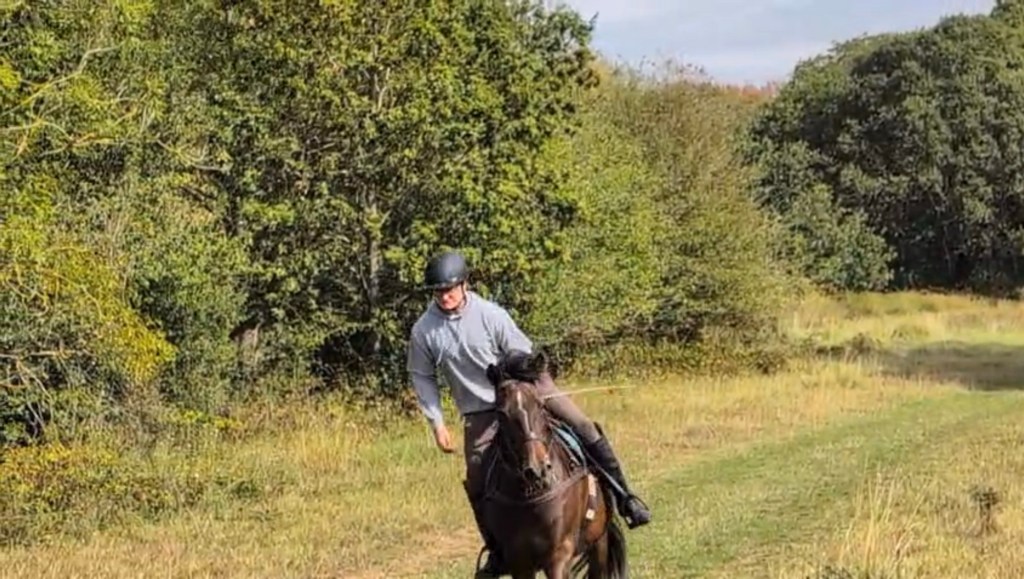
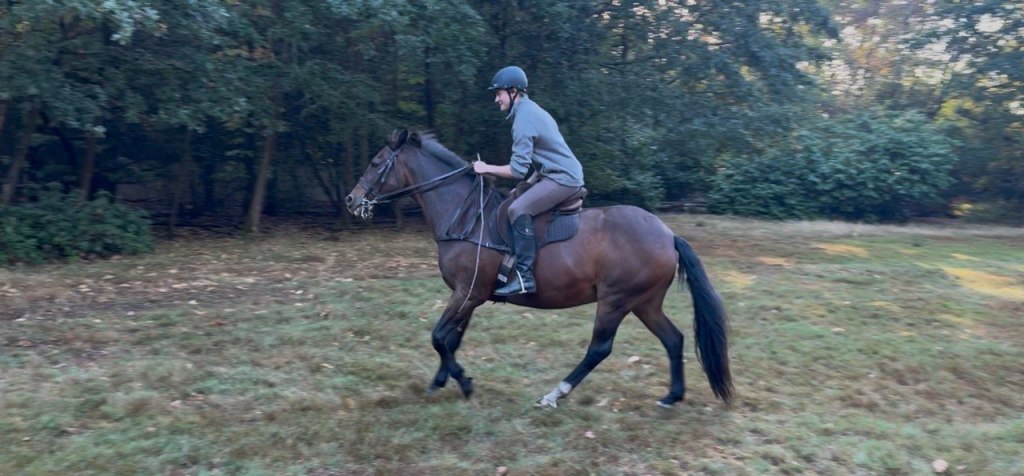
    What we have started introducing though is stop-starts. Canter to halt to canter. Based on the picture attached, saying we’re at canter is generous, but trust me—it’s just a bad picture.

    As you can see, I am leant quite far forward, my stirrups are very short, and my feet are slightly backwards. The position is what felt most natural and comfortable to me and I think that’s partly what riding is: finding what’s right for you. But, as I work in AI, I thought I would plug in the video and see what it says. Out of curiosity more than anything.

    By asking two models that enable video vision (Gemini Pro 3.1 and Gemini 3.8 Flash), I got some insightful feedback. However, there was some confusion on the stirrup length: one model said they were too long and the other too short, so I dove a bit deeper and found out that the recommended stirrup length is in line with your ankle, which led me to dive deeper into correct leg position, and I came up with this:

    “With the stirrup sitting just behind the ball of the foot, wrap your entire leg—from thighs to feet—around the trunk of the horse, with about 25% muscle power, and drive the heels down and point the toes out slightly.“

    Now, AI is likely never going to replace coaches—at least not for me anyway. Part of what I love about polo—and all sports really—is the social element. Speaking with a person, getting their thoughts, reading their emotions, and sharing your own are all a part of what makes learning so much fun.

    In saying that, if I can sit at home and dive deeper into the specifics of my problems, with real feedback on my exact circumstances, then I would be crazy not to. AI is not going anywhere anytime soon and from what I’ve seen, lots of polo pages on Instagram love it. But that’s for another article.

    Thank you for reading this article and if you’d like more, drop it a like, or subscribe to get notifications when new ones drop. I try to do one or two a week.

    Or, if you’d prefer something a bit more dopamine-triggering, then you can follow my Instagram @SamPlaysPolo where I share more regular updates, stories, and more.

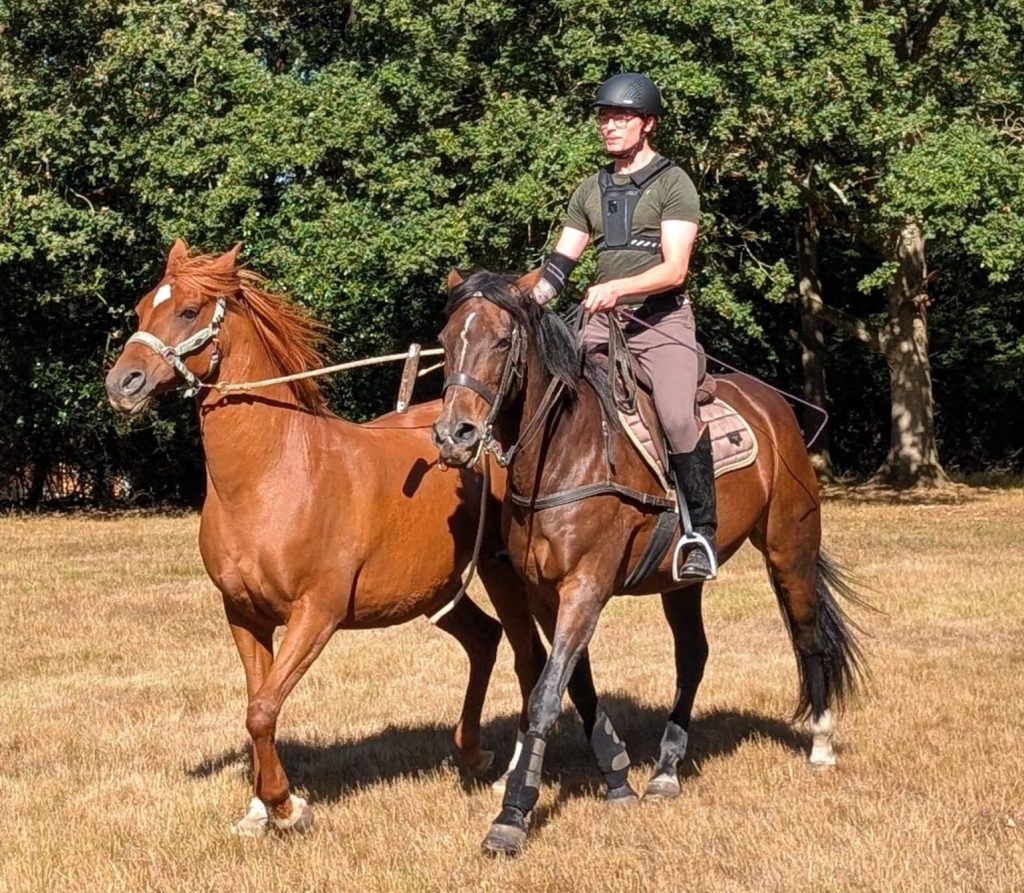
  • Two Ponies One Rider

    Two Ponies One Rider

    Everyday my riding is improving. The seat becomes more comfortable, balance in half-seat becomes more stable, and my leg-on work is helping keep the horse at a consistent speed. I’m working much harder now and I’m glad my coach recognised that.

    Today was my first day hitting a polo ball with a full length mallet, on a pony. What a feeling! Even at a walk–coming up to the ball and getting in position, then taking a half shot is invigorating; it’s hard to focus as I’m so excited to be finally doing it!

    Even with horrific form I was able to make contact with the ball, most of the time. We didn’t do too much stick and ball work as I’ve already had to take time off because of my elbow. It’s essential not to learn bad habits, there’s a lot to think about.

    It’s almost impossible to believe that only four weeks ago was the first time I’d ridden a horse, with the intent to compete, in almost a decade. Every day I train I can fell the tournaments getting closer. It’s hard not to get excited about joining a team.

    The real challenge I am finding though, other than keeping the leg on, yielding, getting out the saddle, and twisting my shoulders, is timing. The mallet work highlighted that clearly.

    On watching the videos we had of my session, I noticed that, when I go to take a shot, I can get in the half seat–but when I come up to the ball itself, my mallets in the wrong place and out of pure desperation I rush and end up falling back into the saddle, pulling on the reigns and signaling the horse to stop.

    Out of all my issues in riding, it’s becoming super clear that it’s balance that I need to work on the most. That and flexibility.