Tag: horsemanship

  • An Autumn Hack Through Myth and History

    An Autumn Hack Through Myth and History

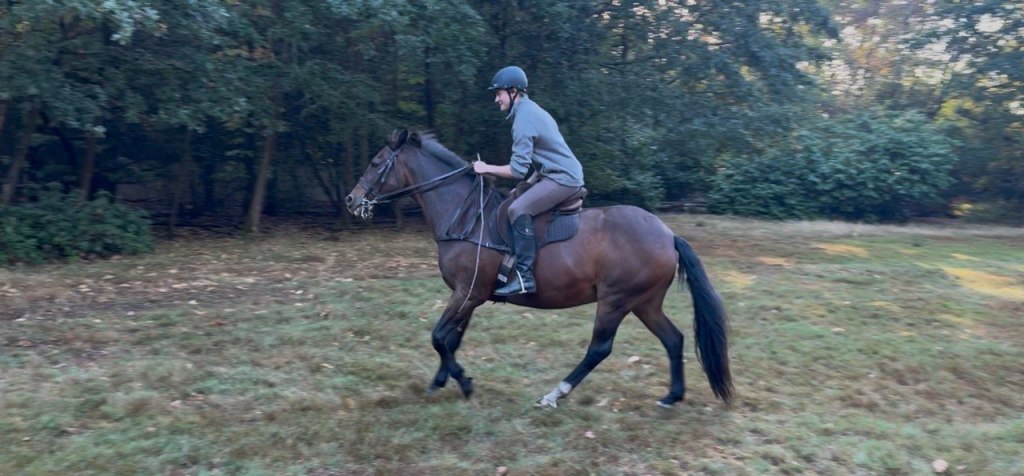
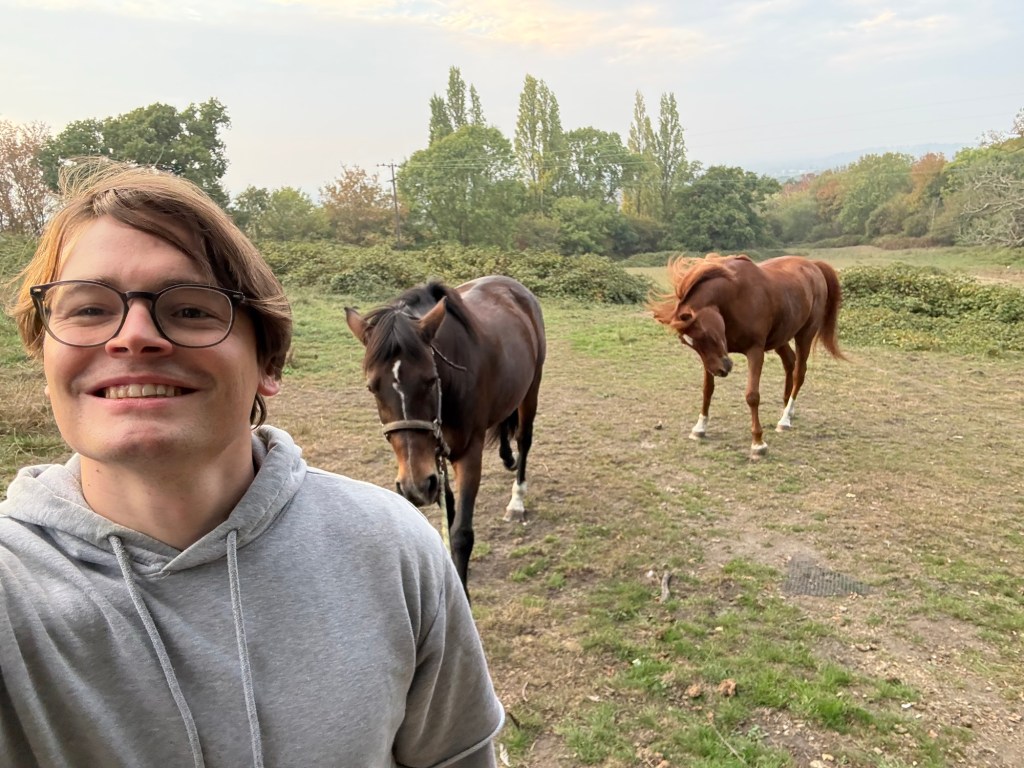
    Firstly, I really like the picture I took for this article. It looks balanced. Something that I’m finding more and more of, the longer I spend in the saddle. I’m pretty sure my phone is auto-editing the pictures, but that’s beside the point.

    Sunday was blessed with a warm and sunny October afternoon. Nature made itself alive and vocal for us as we embarked on our 200-minute hack through the largest collection of trees in London.

    While it doesn’t always feel like it, my patience is improving; Enza is making sure of that. At 30 years old, she’s certainly getting on a bit and has likely grown a bit stubborn in her age. Regardless, remembering to, and staying, calm in moments of frustration is something I am gladly improving on.

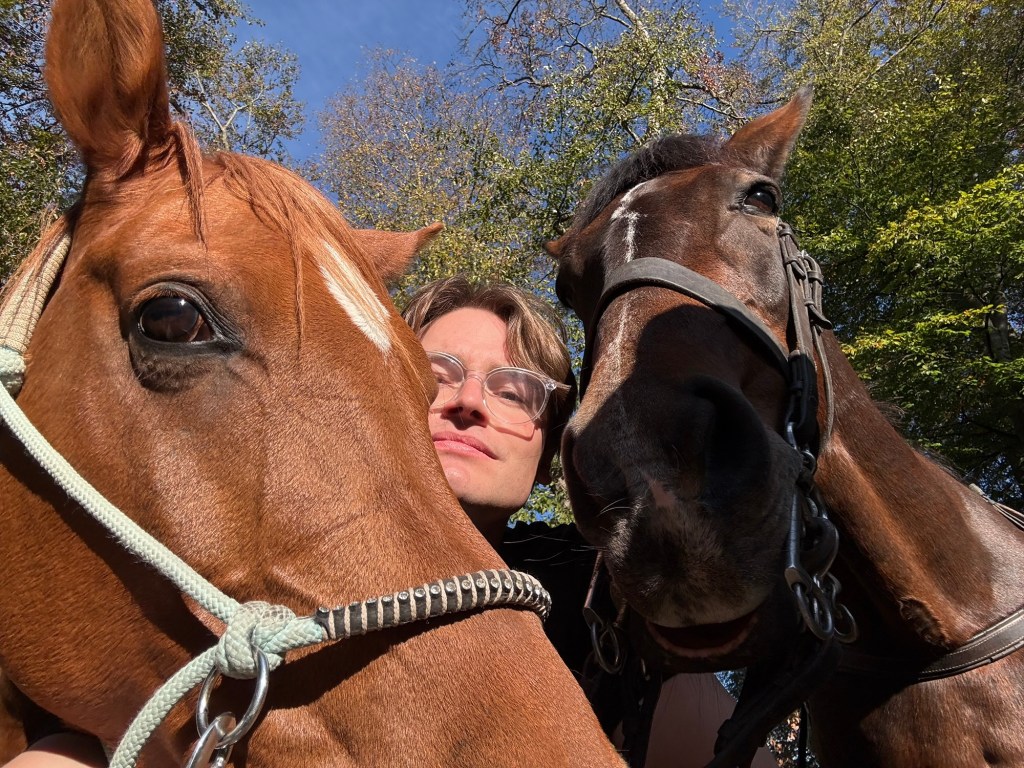
    Fairly early into the ride we stopped at this cool little biker cafe for tea with a friend. Both Enza and Apollo did marvellously, even if there were some obnoxiously loud bikes there. We even had a little photoshoot with some other guests. I don’t have those ones, but here’s one of the gang.
    After that we hacked up the yonder way to a little place you may have seen before. Strawberry Hill Pond. Don’t be disheartened if you’re not familiar with the name; I wasn’t either. But it happens to be the very place where the Belleteyn Festival from Netflix’s The Witcher was filmed. We’ll forgive it for being Henry Cavill-less.

    Following some lovely, albeit ever so slightly blurry, photos, we trotted on and I got some much-needed and serenely mind-altering solo riding. There’s nothing quite like hearing the damp firestorm of British autumn leaves crunch and squish as you wander seamlessly through paths forged hundreds of years prior.

    I could not help but be reminded, as the Epping beech trees surrounded me, of the world of moles and scenes like these that inspired one of my all-time favourite books, Duncton Wood. As the light chatter of the group that followed faded in and out of my focus, that unbridled sense of freedom that I yearned for felt real.

    Before we ended, we wandered deep into the Great Monk Wood and were met with the grounds of tribal and community functions for the ancient Britons, the Trinovantes (of Essex) and the Catuvellauni (of Hertfordshire), who are believed to have lived here 2,500 years ago.

    Overall this was the longest ride, I think ever in my life, and mu backside made sure I knew it. The biggest takeaway is that hacks are amazing fun and being calm is key to being a successful polo player. You cannot make good plays, decisions, or even ride a horse when you’re in an overly emotional state, but when you’re calm, it all starts to come together.
  • Madame Guillotine Would’ve Been Proud

    Madame Guillotine Would’ve Been Proud

    Polo is the most difficult sport ever. No competition. I’m not just talking about equestrian sports. I mean ALL SPORTS. Now, before you come at me, I will preface the reasoning for my claim with the fact that I have not tried every sport on earth. But the sports I have tried (show jumping, skiing, rugby, football, tennis, cricket, boxing, ping pong, snooker, swimming, platform diving, scuba diving) are WAY EASIER.

    Today was stick and balling. A day I look forward to, although it usually ends with my ego sat in a pile of mulch on the floor, next to the arena ball I’ve missed for the seventeen-hundredth time. Still, while it was a challenge, it was useful, and I can feel myself improving.

    In saying that, I chopped the top off so many times today, Madame Guillotine would’ve been proud.

    For those that don’t know, chopping the top off means hitting the ball too high up, so it goes absolutely nowhere on account of being smashed into the floor. It’s also accompanied by a distinctively disgusting clink, rather than the audibly appealing clunk of a well-struck ball. Though it does depend on the ball.

    We kept things at a slow walk, focusing on getting the timing and strokes right, just like we did when I learned on foot. Even so, I floundered. I was wrestling with myself to remember “leg on, squeeze, rein on the neck” while trying to hit the ball at the same time. My coach kept on at my form, but keeping the commands right through the shot was hard enough, let alone looking good doing it.

    What I found was that as soon as I assumed the position for any of the four strokes, I would lose my balance and either leg yield, turn, or stop completely. All of which, in some form or another, would lead to a foul.

    I miss the ease of my early lessons, back before I’d made the weight to ride, when my biggest problem was trying not to get caught in the thorns after chasing a polo ball I’d sent 150 yards into the bush for the third time. Before I could ride the polo pony available to me, I needed to cut around 6kg (around 13lbs, or just under a stone), which I did with a solid calorie deficit, active work and tracking. I’m healthier for it now.

    Riding and stick and balling are, independently, quite simple once you get the hang of them. Not easy, but not impossible either. The processes are easy-ish to remember, the focus is there, and once you notice what you’re doing wrong, you can more or less work out how to improve. That doesn’t feel like the case when you put the two together. Unfortunately for yours truly, as soon as we try to bring it all together for the final scene, the lead act collapses, the sun falls out the sky, and somehow the conductor’s stuck in the tuba.

    While I love polo, today was another tough day. Being recognised for improving did help, and remembering that everyone finds this stuff hard took some of the pressure off, but it was still slightly disheartening. The big realisation today was just how long it’s going to take me to get to the level I want.

    PS. Did you know walk and canter have a similar feel? Nope, neither did I. But it makes total sense why canter is so much more comfortable than trot. Trot’s horrid. Nobody likes trot.

  • Ball then Floor. Well, Ground.

    Ball then Floor. Well, Ground.

    Lots of confidence, energy, but not enough balance. That and having the grip strength of a newborn is the best way to describe the bulk of my lesson today. While trying not to be too harsh on myself, it was a really enjoyable lesson. I’ve said it once and I’ll say it again: polo is an extremely complex sport to learn.

    Polo is arguably the purest expression of multitasking in sport — The Telegraph

    Following the standard tack-up, we plodded up to the green, waving cars by as we went, with a very hyper Apollo in tow. After some trotting around the green, we dove straight into stick and ball work. The hardest, yet most enjoyable lessons we do. 40 minutes of stick work and an hour-long hack.

    It was harder for me to remember to keep my heels down today. Introducing both the mallet and the crop, all while using reins that I did not like (bad tradesmen and all), added so much to think about that it did feel like taking a step backwards, when in reality it’s me learning. That feeling of being on the edge of failure—that’s where the learning really happens. When you’re struggling, but not suffering.

    While the seat wasn’t coming to me so naturally and in some cases I did struggle to get the energy I wanted from poor old Enza, especially when heading to the ball, my leg yielding was improving. Now, I mentioned in my last article that the beauty’s in the details—smaller movements, more result; that may still be the case. However, today… Out of the brain. “That was pretty terrible” must have been the most spoken phrase of the whole lesson! Followed shortly by “good” and “you’ve missed the ball”. You really do have to get out the saddle, and if that knee’s not in, the weight’s not in the heels, or you overextend…

    The standout moment of the entire session, though, was going head-first—or wrist-first—into the floor. Overextending to reach a ball that I was far too far away from ended up with me kissing the dirt. A genuinely valuable insight into how easy it would be to come a cropper playing polo. Straight out the side door. No time to think. Ball then floor. Well, ground. We were outside.

    Luckily, there’s still a high enough percentage of my body that’s rubber, which meant I bounced pretty well. I shot straight up to be met with my coach’s laughter and us both wishing we’d filmed the endeavour. No memory of whether it was trot or canter; could well have been walk. But my coach and I agree it was a proper fall this time.

    We did get an excellent snippet of knowledge from the occasion though!

    Bring the horse to the ball, not yourself to the ball.

    Another notably frustrating thing is the unbelievable weakness in my forearm! I think my technique was slightly off, because OH MY GOD. With all the focus on actually riding, I’ve not been doing much stick work at all, and I’ve been forgetting the basics, losing that strength. I must train grip strength some more. It’s embarrassing.

    To top it all off, I—almost—completely forgot how to ride again. Not as badly as when I first started riding again, all of about 4 weeks ago, but a minor step backwards from what was an incredible lesson last Saturday. All part of the process though. Introducing the mallet again was another layer of complexity.

    Also, being in the UK with the clocks going back soon, I did find myself picking feet and washing down in the dark. Luckily, the chest mount I have for my phone came in super handy for hands-free yard work. Win Temu.

    For those that are curious: I don’t do too much stick and ball work while riding as we are doing what we can to protect my arm. I’ve already had a very minor case of golfer’s elbow. I wish we could call it polo elbow, but let’s be honest: no one would know what I’m talking about. When we do do ball work, I wear both an elbow and a wrist support and have a grip strength trainer at home.

  • Learning Polo with AI

    Learning Polo with AI

    My last lesson was predominantly a hack. We did some school work though, which is always super helpful. One thing I’m super glad about is the fact we’re taking more photos and videos, which I have started uploading into AI models.

    The lesson itself started off as most do, with tacking up and general chit chat. Very glad to share that the custom polo shirt I made for my coach went down a treat (if you saw my Instagram, you know what I’m talking about).

    After a quick tack up and some treats, we headed off. I’m leading the younger horse Apollo more often now, which is giving me great groom experience. One day I hope to get to a club both in the UK and Argentina to trade some work for lessons.

    On getting to the green, we did the standard figure-of-eights and leg yielding, both of which I am improving on quite well. The feeling is starting to come to me; not quite so alien anymore.

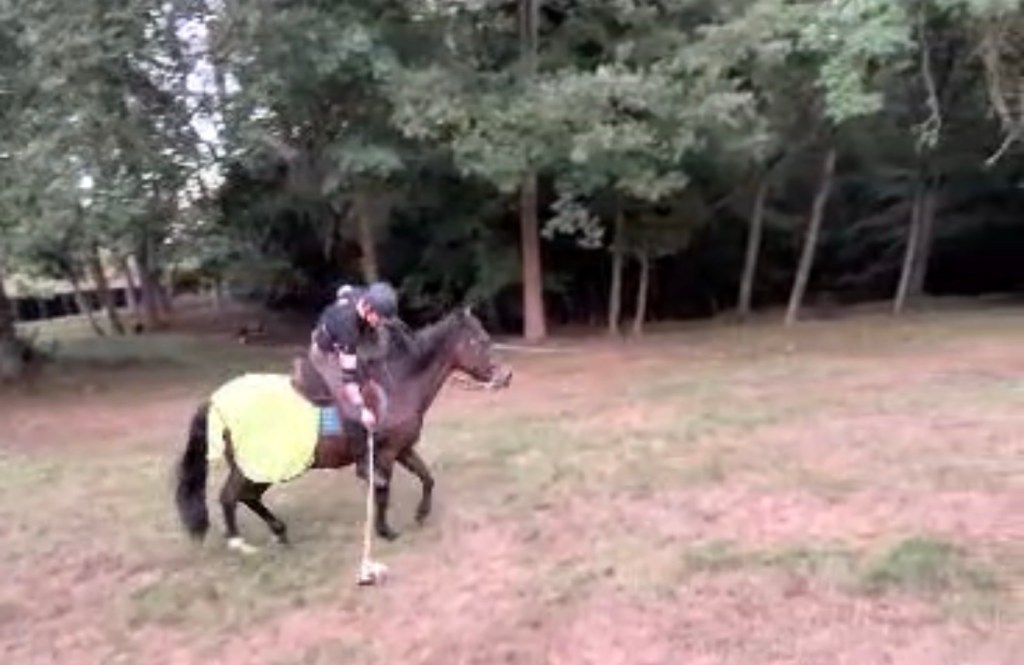
    What we have started introducing though is stop-starts. Canter to halt to canter. Based on the picture attached, saying we’re at canter is generous, but trust me—it’s just a bad picture.

    As you can see, I am leant quite far forward, my stirrups are very short, and my feet are slightly backwards. The position is what felt most natural and comfortable to me and I think that’s partly what riding is: finding what’s right for you. But, as I work in AI, I thought I would plug in the video and see what it says. Out of curiosity more than anything.

    By asking two models that enable video vision (Gemini Pro 3.1 and Gemini 3.8 Flash), I got some insightful feedback. However, there was some confusion on the stirrup length: one model said they were too long and the other too short, so I dove a bit deeper and found out that the recommended stirrup length is in line with your ankle, which led me to dive deeper into correct leg position, and I came up with this:

    “With the stirrup sitting just behind the ball of the foot, wrap your entire leg—from thighs to feet—around the trunk of the horse, with about 25% muscle power, and drive the heels down and point the toes out slightly.“

    Now, AI is likely never going to replace coaches—at least not for me anyway. Part of what I love about polo—and all sports really—is the social element. Speaking with a person, getting their thoughts, reading their emotions, and sharing your own are all a part of what makes learning so much fun.

    In saying that, if I can sit at home and dive deeper into the specifics of my problems, with real feedback on my exact circumstances, then I would be crazy not to. AI is not going anywhere anytime soon and from what I’ve seen, lots of polo pages on Instagram love it. But that’s for another article.

    Thank you for reading this article and if you’d like more, drop it a like, or subscribe to get notifications when new ones drop. I try to do one or two a week.

    Or, if you’d prefer something a bit more dopamine-triggering, then you can follow my Instagram @SamPlaysPolo where I share more regular updates, stories, and more.

  • Four Horse-Lengths and a Willing Tumble

    Four Horse-Lengths and a Willing Tumble

    First off, I managed to keep both a trot and a canter for more than 4 horse lengths, almost completing a full figure of eight in the make shift green arena we’ve got near the field. While rather miraculously going head over tit. Naturally, there is a video of on my Instagram.

    Do not expect anything mind-blowing. It was really quite pathetic and far too controlled: more of a willing tumble than a genuine fall.

    It is difficult to say how much of the lesson’s success was down to factors within my control. Maybe I am simply getting back into practice, but even on the ride out, Enza felt much more willing than she had last time. The walk from the field had energy, even with the stubborn Apollo in tow.

    Then the coach appeared.

    Stephen began snapping me into shape, encouraging me with the same phrases I remember hearing during riding lessons more than a decade ago, before jumping at Summer House in Gloucestershire:

    “Leg on.”

    “More leg.”

    “Get her moving.”

    They are phrases that experienced riders will know all too well.

    At that moment, all my composure and control seemed to fly out of the window. To the reader thinking, “Well, that’s the instructor’s fault—he should be more encouraging and less controlling,” I hear you. I had exactly the same thought.

    However, as I was reminded, polo is not the same as other equestrian sports.

    In show jumping, the riding is highly technical, neat and controlled. During each competitive round, the rider has the arena to themselves, and the atmosphere demands concentration and relative quiet.

    Polo is not like that.

    When playing polo, the pressure is unimaginable, 8 horses, a ball, Line-of-the-ball (LOB), ride-offs, team strategy, and more. Keeping that in mind, it’s essential that high pressure and high demand is part of the foundation during training. That and the actual foundations.

    You can’t just trot up and down the side during a polo game. You need to get on every horse and know how to ride it in 15 seconds, no matter what’s going on around you.

    Although this lesson went more smoothly than the previous one, there were moments when my sense of humour began to falter—moments when I could not understand why something was not going the way I wanted.

    In hindsight, and after a quick demonstration, I recognised that my balance and the distribution of my weight through the stirrups still need work. The main source of confusion, however, was the command “leg on”

    I am still unsure whether this is specific to polo or simply something I have forgotten after so long out of the saddle. In this exercise, at least, “leg on” meant repeatedly nudging the horse with my heels. It did not mean maintaining a constant squeeze, as though trying to crush a watermelon.

    I was also being asked to use my knees and thighs differently from the way I remember in more traditional, “technical” riding—but more on that another time.

    All in all, we ended yesterday’s session on a much better note than the previous one. There is still a great deal to do, but there is now at least a chance that we might get involved in some arena games in early 2027.